Outdoor life
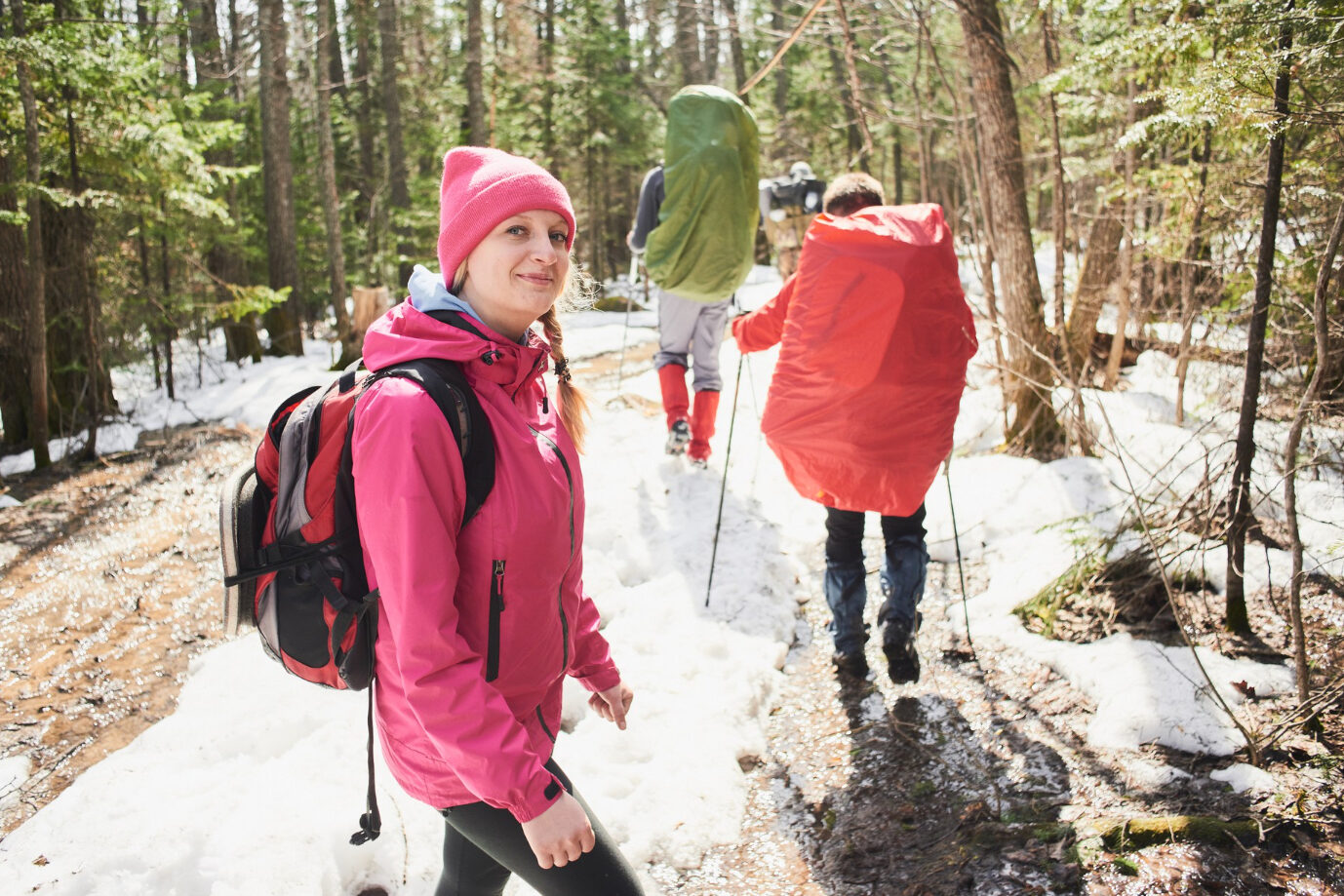
Plan your trips carefully in advance and think about what dangerous situations might happen.
Anticipation is key to safety also when spending time in the wilderness. Before you head out into the wilderness, remember these things:
- Make a good plan for your trip and be prepared to survive on your own. Find out the routes and, for example, the locations of huts in advance.
- Find out about the conditions at the destination. Check the weather forecast and, for example, risk of avalanches. Make note of the fact that some routes are not accessible throughout the year.
- Only go into the wilderness if you know how to map-read. Always take a map and a compass with you and don’t rely on GPS tracking alone. Your phone and other devices might run out of battery, and there is often no mobile phone network in the wilderness.
- Cross waterways at safe places, preferably using a bridge. Remember that thickness of ice varies in winter.
- Pack enough warm clothes and food, a first aid kit, a head lamp and fire-making tools.
- Also, take a camp stove and an emergency bivvy with you in case the weather turns bad or you get injured.
- Tell you loved ones of your plan before you leave.
Protect the environment while hiking.
Follow the outdoor etiquette.
Outdoor etiquette
When hiking, bring a first aid kit that includes:
- triangular bandage
- sterile gauze
- gauze
- elastic bandage
- plaster
- plaster for blisters
- wound cleanser
- tweezers
- small scissors
- medicine for adder bites or wasp stings
Source: Hiking tips – Luontoon.fi
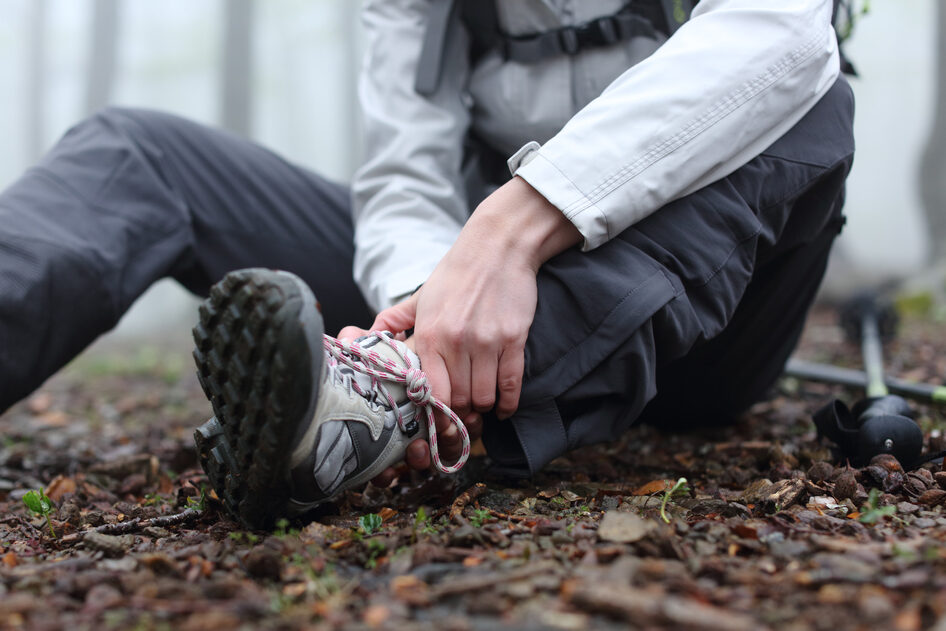
As we all know, it is impossible to control the nature, and it can put us in danger suddenly.
By always checking your gear and the conditions, you can significantly reduce the risk of accidents while travelling in nature.
Do this if you get lost in the wilderness.
-
Stay calm and take a break.
If you are in a group, stay together.
-
Eat something.
Your mind works better once you eat something.
-
Mark your last certain position on the map.
Try to recall your last movements.
-
Look for landmarks around you.
Study the terrain and landmarks in the surrounding area and compare them with the map.
-
If you cannot determine your location, head towards your bail out route.
If you cannot determine your location, head towards your predetermined bail out route, towards the nearest large landmark, such as a fell, a river or a road.
-
Take a time-out if the situation escalates.
If the weather is bad, you are tired or the group is in disagreement, you need to take a time-out. It is a good moment for setting up a camp, eating, resting and waiting for the weather to improve.
-
Make yourself visible.
If you have been lost for a long time and it is safe to assume that you are being searched for, make yourself visible, for example, by breaking the surface of the ground, using a beacon fire or placing something big and colourful in plain sight.
Source: Hiking tips – Luontoon.fi
Remember that signal is poor in many places in the wilderness, meaning that your mobile phone will not work.
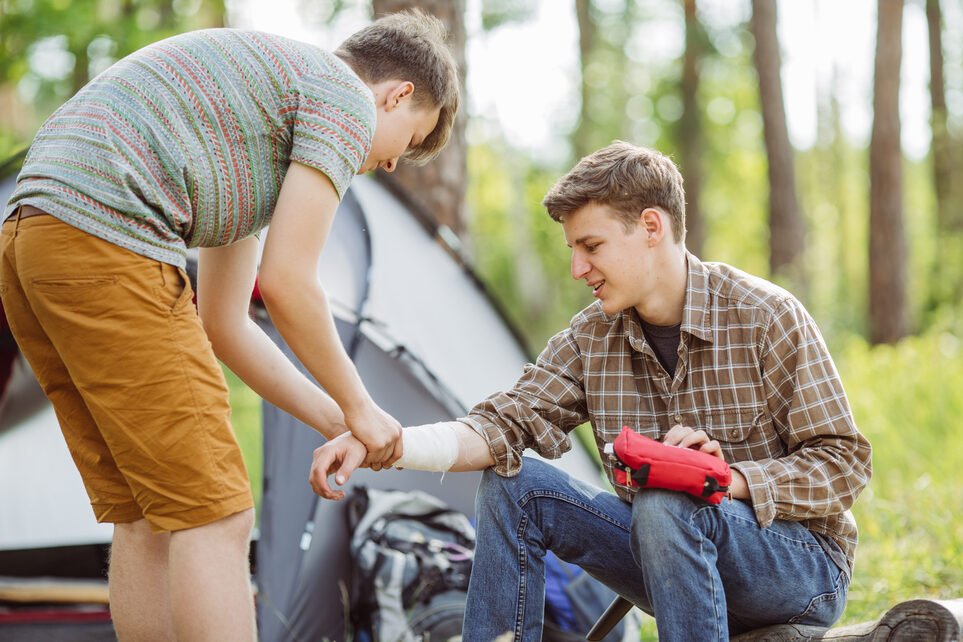
First aid instructions for when an axe nicks your leg or a knife slits your hand
-
Stop the bleeding.
Apply pressure on the bleed. You can also ask the injured person to apply pressure on the bleed themselves. If a foreign object, such as a knife, is lodged in the wound, do not removed it.
-
Help the injured person to sit or lie down and apply a bandage to the wound.
Apply a pressure bandage to the wound. You can make the pressure bandage out of a roll of bandage and elastic bandage. If necessary, you can also use other equipment at hand, such as gloves and a piece of cloth.
-
Help the person you are assisting get further treatment.
Call the emergency number 112, if the pressure bandage is not enough to stop the bleed or if the person you are helping is showing signs of shock.
Source: Finnish Red Cross (SPR)
Symptoms of shock
- skin is pale and clammy
- the person is restless and later incoherent
- breathing is quickened
- mouth is dry and the person you are helping is very thirsty
- pulse is fast and difficult to find
In shock, blood circulation in the tissues is insufficient to supply the cells with enough oxygen.
Shock can be caused by severe internal or external bleeding, failure of the heart to pump effectively or severe fluid loss, for example as a result of a burn or severe diarrhoea.
A severe allergic reaction can also cause shock.
First aid for someone who is in shock
- Lay the person you are helping down.
- Call the emergency number 112.
- Cover the person and insulate them from the ground to avoid heat loss.
- Calm the person down.
- Perform any other necessary first aid based on the symptoms.
- Do not offer anything to eat or drink.
- Monitor their breathing and circulation.
Source: SPR
Hypothermia
Hypothermia refers to a drop in normal body temperature to below +35 °C and the changes this causes in the body. When hiking, hypothermia is a risk, for example, if you fall into cold water, collapse in the snow in freezing temperatures or are exposed to cold winds for a long time.
You can get hypothermia at all times of the year. The following symptoms are a sign of hypothermia:
- intense feeling of cold, chills, muscle stiffness
- impaired judgement (a person suffering from hypothermia may even start to take their clothes off)
- decreased level of consciousness, confusion
For more information on the dangerous situations caused by the weather and natural phenomena, check out the ’Natural phenomena’ section.
Patients suffering from hypothermia should not be given cold liquids, alcohol or cigarettes.
First aid for a hypothermia patient
- Take the shivering person to shelter from the cold and wind.
- Give them something warm to drink.
- Help the person to put on some dry clothes and wrap them in a blanket, plastic sheet or sleeping bag.
- Try to get the shivering person to move.
- Call the emergency number 112.
- You must not rub a patient suffering from hypothermia or warm them up too quickly. They should not be given cold liquids, alcohol or cigarettes.
Do you know what to do if you encounter a large carnivore, such as a bear, in the wilderness?
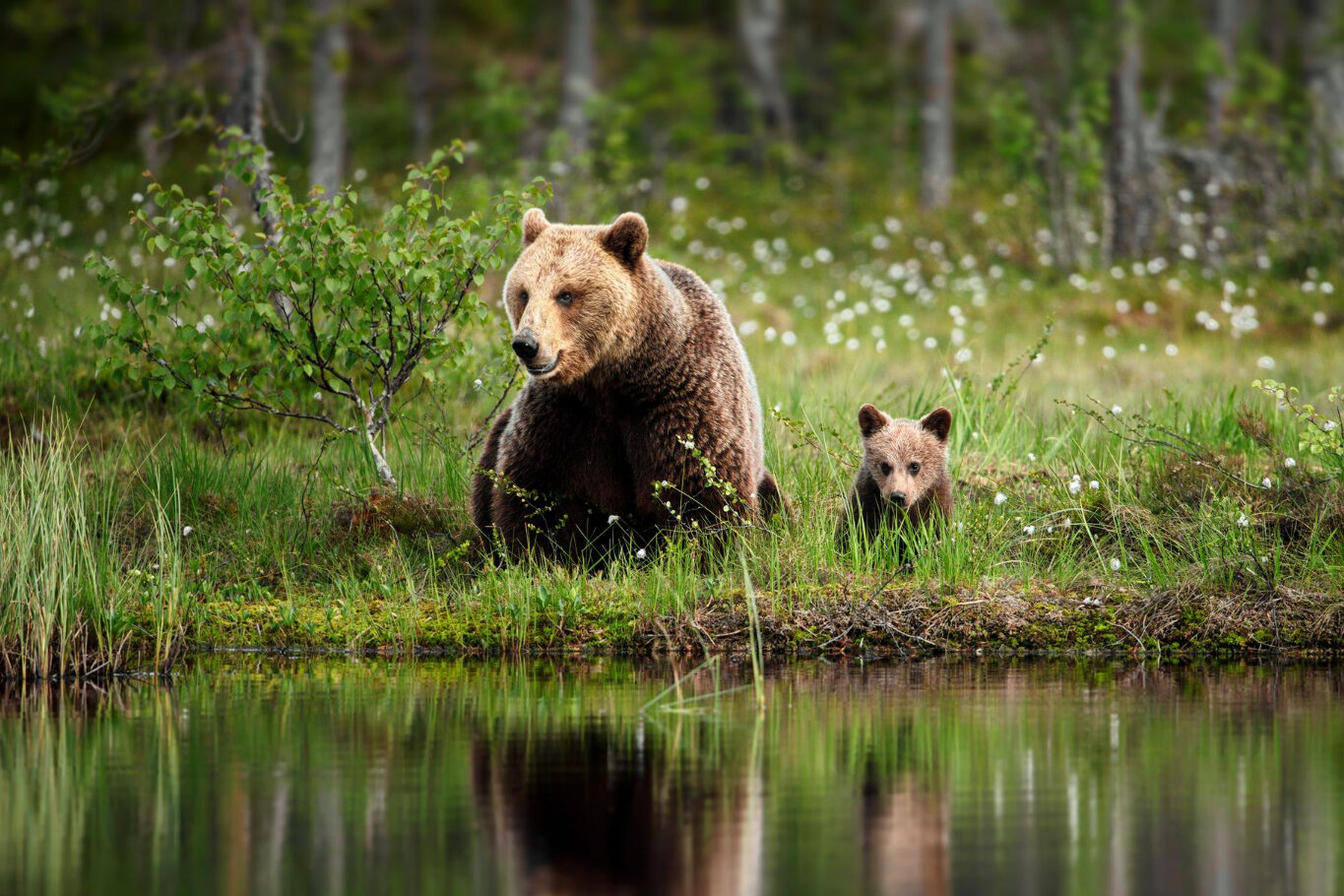
If you encounter a bear, remember these instructions:
-
An angry bear will grunt and toss its head from side to side.
The bear warns you by getting on its hind legs and growling loudly.
-
Try to remain calm and back away slowly while talking quietly.
A bear will interpret shouting as hostility.
-
Do not turn your back on the bear.
Retreat the same way you came from without turning your back on the animal. However, don’t stare it in the eyes.
-
Do not climb a tree or run away.
However, you will not be able to take on a bear.
-
If the bear attacks, throw yourself on your stomach on the ground.
Also, protect your head and neck with your hands.
-
If you hit a bear with your car, call the emergency number 112.
Normally, a bear tries to steer away from people. However, if you do encounter a bear, it has probably been caught off guard for one reason or another. During encounters, bears may behave in a curious or an aggressive manner but remember that bears are always dangerous!
If you find an animal killed by a bear, retreat in the same direction from which you came. The same applies if you see a bear cub, because the mother is likely to be somewhere close by.
Instructions on how to report an emergency
-
Call the emergency number 112.
Only call in urgent, genuine emergencies when someone’s life, health or property or the environment is under threat or in danger. If you use the 112 mobile app, remember to make the call through the app. This way, your location information will be forwarded to the emergency response centre automatically.
You can also call the emergency number 112 using a foreign mobile phone subscription. Even then there’s no need to use a country or area code: just dial 112.
-
You can also send a text message.
If necessary, you can also report an emergency by sending an SMS to the number +358 112.
The use of emergency SMS messages is primarily reserved for individuals who cannot hear or produce speech. An emergency text message can only be sent from a pre-registered phone number. A number can be pre-registered on the Suomi.fi website.
-
Do not call or text the emergency number in the following cases:
if the situation is not urgent, if you have general enquiries or want to ask a question or if you are reporting a disturbance where no one is in danger.
Source: Suomi.fi