Water safety
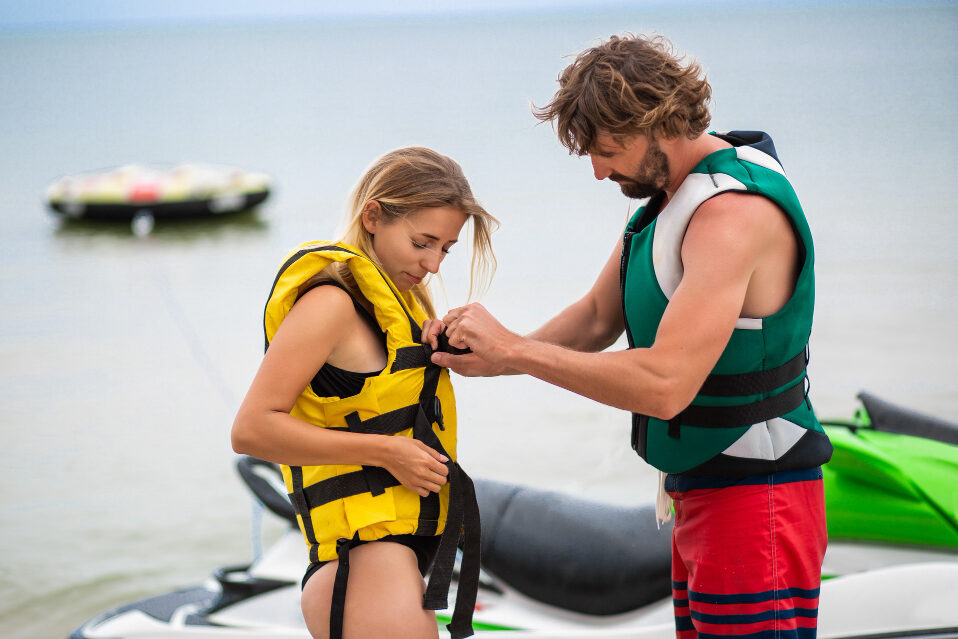
Choose a life jacket that is the right size and suitable for your purpose.
A life jacket marked 100N is meant for sheltered waters, 150N is meant for coastal waters and 275N is meant for open sea conditions.
Mandatory boat equipment
A motorboat and a sailing boat that is over five metres long must have:
- an approved life jacket, personal flotation device or immersion suit for each person on board, corresponding to the size and weight of the user
- a pump or other means of removing water
- oars, a paddle or an anchor with lines
- a portable fire extinguisher duly inspected if the watercraft has a functioning flame-powered burner, an inboard engine or a stern-drive engine or an outboard engine of more than 25 kW except in the case of a personal watercraft
Source: Finnish Transport and Communications Agency Traficom – Water Traffic Act (in Finnish)
Right-of-way rules on the water
People on the waterways have an obligation to give way instead of right of way. Remember these rules when you go out boating.
- You can overtake another boat on either side. Use the side that seems safer and be mindful of the waves you will create for other boats.
- When boats meet bow to bow, both of them give way to the right.
- When motorboats have intersecting courses, the boat coming from the left gives way, preferably from behind the stern.
- A motorboat must give way to a sailing boat. If a sailing boat is powered by an engine, it is subject to the same rules as motorboats.
- Sailing boats give way to each other according to the wind. If the wind is blowing from the same direction, the boat on the windward side will give way. If the wind is blowing from different directions, the boat on the side where the wind is blowing from the left will give way.
- All boats in the waterway must give way to ships whose safe passage is restricted by their large draught. When boating, avoid close encounters with ships, as they turn slowly.
Source: The Finnish Transport and Communications Agency Traficom (in Finnish)
Always check the weather forecast.
Also, tell your family and friends about the route you’re planning to take and let them know if it changes at all.
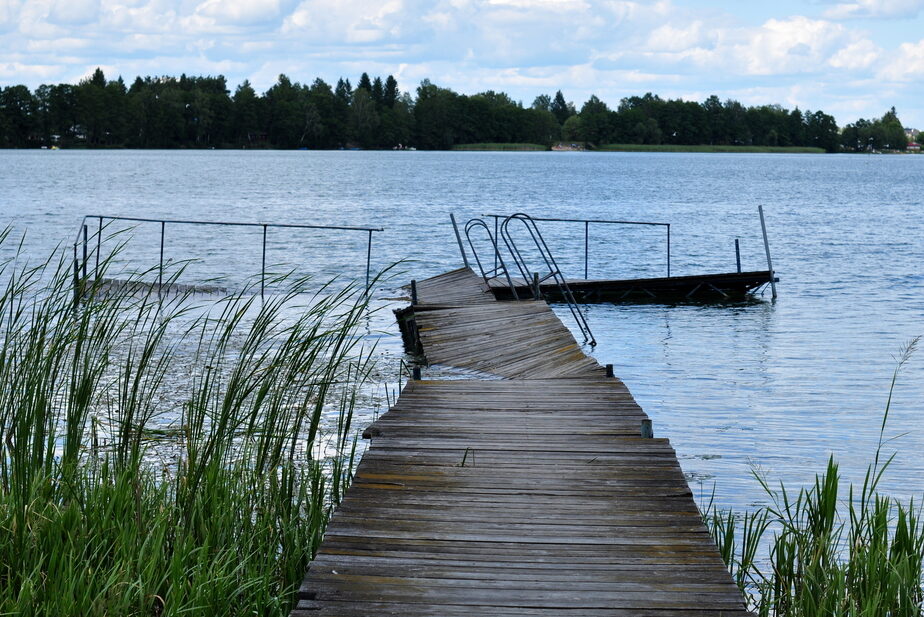
The legal limit for blood alcohol level when operating a watercraft is one per mille (0.1%).
You are also not allowed to operate a watercraft if you are even slightly intoxicated if doing so would endanger your safety or that of others. Even a small amount of alcohol affects your ability to function on the water.
For example, in 2022, 27 people died in recreational boating accidents in Finland, and alcohol was the cause of 15 of these fatalities.
The Finnish Transport and Communications Agency Traficom (in Finnish)
Choosing a life jacket and its condition
- Choose a life jacket that is the right size and suitable for your purpose. A life jacket marked 100N is meant for sheltered waters, 150N is meant for coastal waters and 275N is meant for open sea conditions.
- You can check the lifespan of a life jacket from the instructions of the manufacturer. In any case, always check the condition of a life jacket in shallow coastal water before use.
- The lifespan of life jackets is affected by factors such as how they are stored. Life jackets must be stored in a dry and warm place so that they don’t become mouldy during the winter. The manufacturer’s instructions must also be followed during maintenance.
- You can buy a used life jacket if it appears to be in good condition, its fastening straps, whistles and other parts are in good order and the buoyancy material is intact and elastic.
- If a second-hand life jacket is in bad shape or its markings, like its weight class, are worn out, you shouldn’t buy it.
Source: Finnish Safety and Chemicals Agency Tukes (in Finnish)
Also ensure your pet’s safety on the water!
Even a good swimmer can tire quickly in rough waters, so it’s important that a dog has its own life jacket in case of emergencies.
You can lift a dog out of the water with the help of the grab handle on the life jacket. A brightly-coloured jacket makes it easier to detect the dog from an approaching boat, for example.
Read more about pet safety in the Pets section
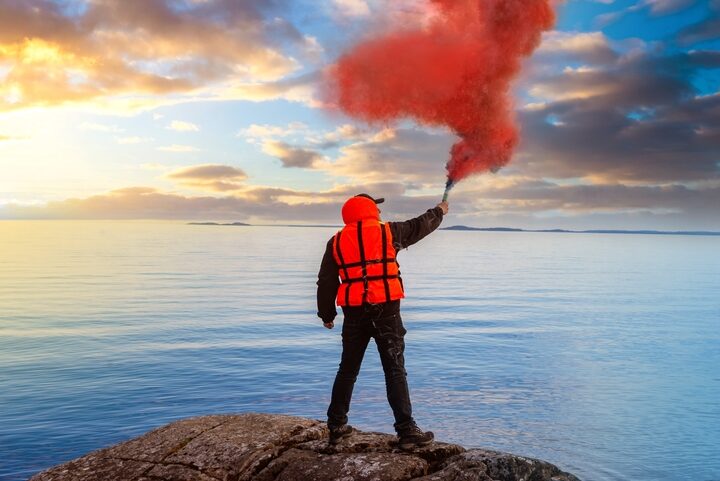
Distress signals may only be used in emergencies.
The most common distress signals
- ’MAYDAY’ on the radiophone
- red rocket parachute flare
- SOS (. . . – – – . . . ) as a light or a sound signal
- red hand flare
- slow and continual raising and lowering of outstretched hands to the side of the body
- uninterrupted sound signal using e.g. a fog horn
Source: Finnish Border Guard
How long does it take to drown?
- After losing consciousness, oxygen supply decreases until vital functions cease and a person dies.
- Typically, drowning takes approximately five to ten minutes, but the time it takes to drown varies depending on the age and physical fitness of the person as well as the temperature of the water.
A guide to rescuing someone who has fallen into water
-
Call for additional help.
If at all possible, call for additional help before you begin the actual rescue operations.
-
Calm yourself and the victim down.
Calm yourself down and calm the person you are helping down by telling them that help is on the way. This will give the person a sense of security and strength to carry on for a little bit longer.
-
Find an assistive device.
Find some sort of a long item to help and protect you, preferably something that floats. If the conditions are difficult, try to get help from other people at the scene or by calling the emergency number 112.
-
Rescue.
Approach the person needing help carefully but quickly. Hold the assistive device between you and the other person and pass it to them if they are close to the shore. You can also throw the device to them. Help the person to the shore, administer the necessary first aid and help them get further treatment if necessary.
Source: Viisaasti vesillä (in Finnish)
CPR for adult drowning victims
-
Put the person you are helping onto a firm surface on their back and kneel beside them.
-
Resuscitation of a drowning victim always begins with opening the airways and giving five initial breaths.
Lift the person’s chin and tilt their head back from the forehead. Close the person’s nostrils by pinching, press your lips tightly around their mouth and calmly blow air into their lungs five times.
-
Place the heel of one hand on the middle of the person’s breastbone and the other hand on top of the first one. Keep your arms straight. Your shoulders should be above the chest of the person you are helping.
-
Press the breastbone 30 times in a piston-like motion at a rate of 100 to 120 times per minute.
-
After 30 compressions, open the airways again and give two breaths.
-
Continue cardiopulmonary resuscitation, alternating between 30 compressions and two ventilations, until a professional takes over, the breathing normalises or you exhaust yourself.
Source: Terveyskirjasto
Note: Resuscitation of a drowning victim always begins with opening the airways and giving five initial breaths. After that, you continue cardiopulmonary resuscitation, alternating between 30 compressions and two ventilations.
Starting resuscitation within a minute of drowning almost guarantees a full recovery, but even ten minutes of drowning can impair neurological survival in particular.
Instructions on how to report an emergency
-
Call the emergency number 112.
Only call in urgent, genuine emergencies when someone’s life, health or property or the environment is under threat or in danger. If you use the 112 mobile app, remember to make the call through the app. This way, your location information will be forwarded to the emergency response centre automatically.
You can also call the emergency number 112 using a foreign mobile phone subscription. Even then there’s no need to use a country or area code: just dial 112.
-
You can also send a text message.
If necessary, you can also report an emergency by sending an SMS to the number +358 112.
The use of emergency SMS messages is primarily reserved for individuals who cannot hear or produce speech. An emergency text message can only be sent from a pre-registered phone number. A number can be pre-registered on the Suomi.fi website.
-
Do not call or text the emergency number in the following cases:
if the situation is not urgent, if you have general enquiries or want to ask a question or if you are reporting a disturbance where no one is in danger.
Source: Suomi.fi