
Electric mobility devices

Electric scooters, pedelecs, powered cycles
- Electric scooter, or an e-scooter, is a light electric vehicle, which is generally subject to the traffic rules for cyclists.
- Electric scooters are generally used on cycle paths. Riding them on footpaths is not permitted.
- People under the age of 15 are not permitted to ride electric scooters or other light electric vehicles.
- Riding is forbidden if your blood alcohol content is at least 0.05 % or if there are any narcotics in your bloodstream. The police have the right to perform breath or saliva tests. The offence carries a traffic penalty fee of €200.
- Electric scooters must have front lights, rear lights, reflectors and an audible warning device.
- Light electric vehicles are allowed to travel at a maximum speed of 25 kilometres per hour. If you ride it any faster than this, it has to be registered as a moped.
- Walking aids or mobility devices, light electric vehicles and motorised bicycles weighing more than 25 kilograms must be insured.
Source: Finnish Transport and Communications Agency Traficom (in Finnish)
The power of devices that serve as walking aids, such as electric balance boards, may not exceed one kW, and the maximum speed may not exceed 15 km/h.
These types of personal transport devices are treated in the same way as pedestrians in traffic.
Transporting battery-powered vehicles on public transport
- Standard-sized electric bicycles and electric scooters can be transported on trains and metro trains.
- As a general rule, bicycles are not allowed in local buses. However, this varies between cities.
- It is forbidden to transport a battery-powered moped or scooter in the metro. An exception is made for electric mopeds used as mobility aids by people with disabilities.
Leaving electric scooters in passageways can create dangerous situations
An electric scooter must be parked upright in a place where it causes no inconvenience to other people or traffic.
However, not all rental scooter users have internalised this. All too often, e-scooters are left rudely in the middle of yards or footpaths, for example.
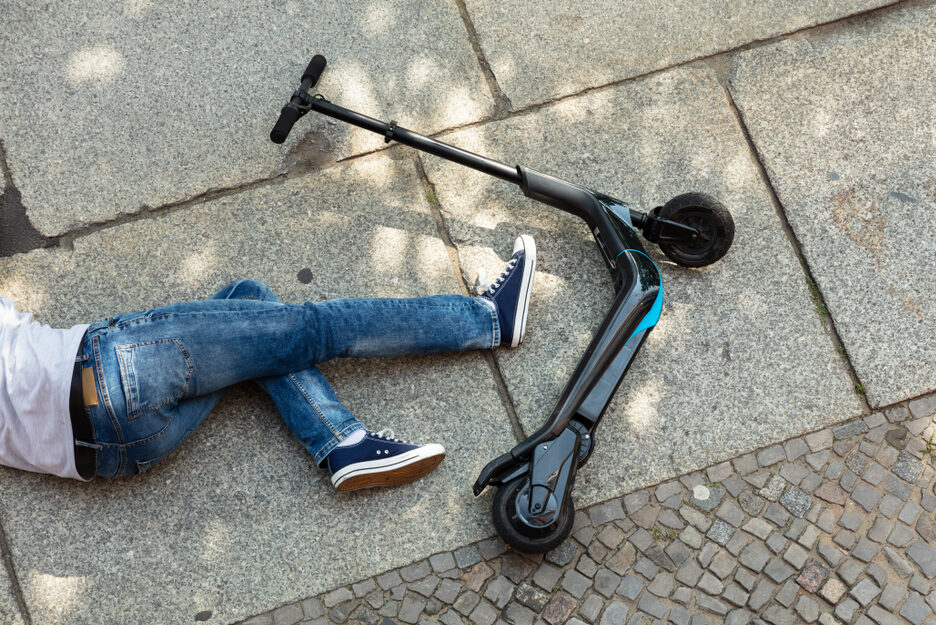
- Everyone should understand that a pedestrian who is visually impaired may trip over an electric scooter that is lying on a passageway.
- In worst-case scenario,a person using mobility aids may have to move into the carriageway to avoid an e-scooter. If the edge of the footpath is steep, it may be impossible for them to overtake.
- A wheelchair user cannot move an electric scooter out of their way and therefore cannot continue their journey.
- Carelessly parked e-scooters may also obstruct the passage of emergency vehicles and therefore interfere with rescue operations.
Park your scooter so that it does not endanger the safety of others.
If you see a scooter lying in the middle of a footpath, for example, pick it up and move it out of the way. It only takes a moment and makes everyday life easier, especially for people with visual impairments and those who use mobility aids.
Only one person at a time may ride on an electric scooter.
Accidents involving electric scooters
- Every year, there are several hundred accidents that cause injuries of various degrees to electric scooter riders.
- The most common accident involving an electric scooter is a fall that doesn’t involve other parties.
- The most common injuries are head injuries and limb fractures. Many of the injured suffer at least moderate injuries.
- Most of the accidents take place during the night, and the victim is often intoxicated.
- Efforts have been made to reduce the amount of accidents by lowering the speed of electric scooters and removing them from use on weekend nights.
- In some countries, electric scooter riders must wear a helmet, which can prevent head injuries.
The most typical causes of death in accidents involving electric scooters are brain injuries or haemorrhages.
In 2024, three people died in electric scooter accidents in Finland.
Riding electric bicycles during rain
- In general it can be said that electric bicycles have been designed to withstand normal rain.
- However, the features of electric bicycles may vary, so always follow the instructions provided with the bicycle and equipment regarding their use and storage!
- The bicycle and its parts should be allowed to dry inside after riding in wet conditions.
- As with other electric and battery-powered devices, it is best to avoid excessive exposure to water.
- Prolonged exposure to heavy rain may damage electrical components.
Battery life of an electric bicycle – how far can I go on a single charge?
- These days, nearly all electric bikes have lithium-ion batteries. A high-quality and efficient battery is one of the most important features of an electric bicycle.
- The more watt-hours the battery has, the further you can go on a single charge.
- However, battery life depends on many other factors, such as the assistance level selected, the weight of the cyclist, the hilly nature of the terrain and the outside temperature.
- The operating range of most electric bikes varies from 30 kilometres to over 100 kilometres per charge.
- Some manufacturers promise a range of up to 200 kilometres. However, each manufacturer has their own way of estimating the range, and the maximum range can usually only be achieved under optimal conditions.
- The performance and lifespan of the battery are also significantly affected by whether you use and store the battery correctly, that is, exactly as instructed by the manufacturer.
Do you know where it is best to charge the battery of an electric bicycle or scooter?
You can find instructions for safely charging of batteries and preventing battery fires under the ‘Battery fire’ section of this website.
Battery fires
- Visit the Liikennetilanne.fi website to check the current situation on the road weather cameras, driving conditions forecasts, roadwork locations and emergency alarms.