Drowning
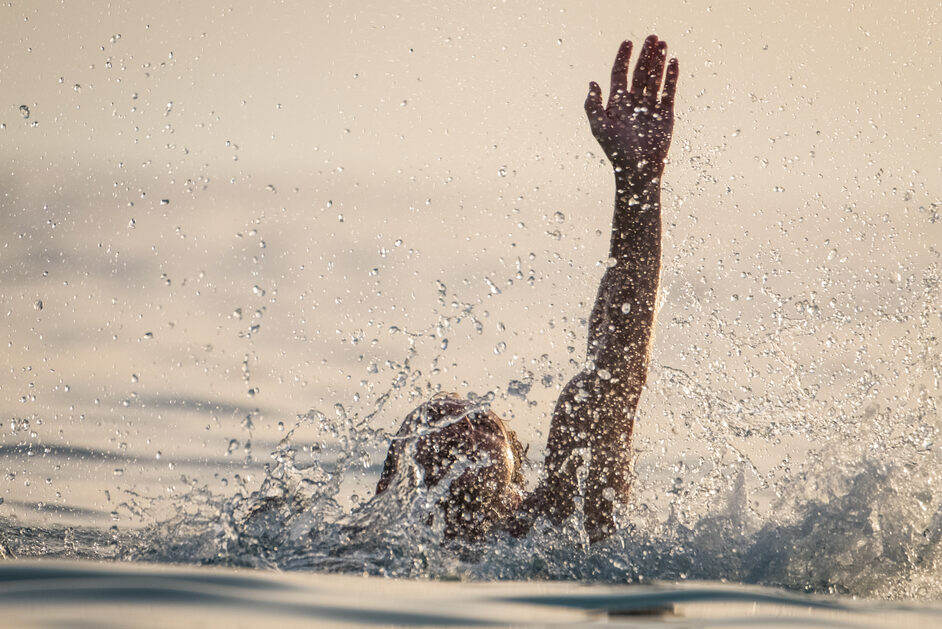
In films, a drowning person may wave their hands and call for help, but in real life, drowning usually happens super quietly.
Drowning usually happens in familiar waters
Drowning refers to the entry of fluid into the victim’s airways, thereby preventing them from breathing. Approximately 150 people drown in Finland each year.
Accidental drownings almost always occur during leisure time near a cottage or the victim’s home.
The most common situations that lead to drowning are:
- swimming, splashing around or cooling off
- falling into water unintentionally, for example, off of a pier
- travelling by watercraft
- falling through ice
On average, half of all accidental drownings occur while the victim is under the influence of alcohol.
Source: Finnish Swimming Teaching and Lifesaving Federation (FSL)
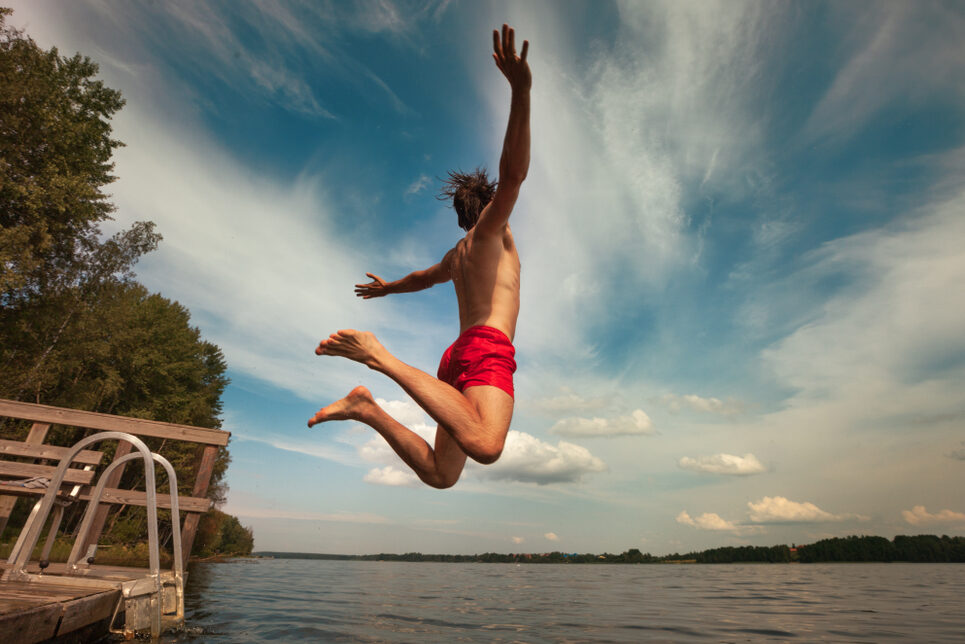
Every summer, careless dives cause quadriplegia, more minor spinal cord injuries and other injuries in Finland.
Be really careful and don’t jump into any water unless you know for sure what’s under the surface and how deep it is!
How long does it take to drown?
- After losing consciousness, oxygen supply decreases until vital functions cease and the person dies.
- Typically, drowning takes approximately five to ten minutes, but the time it takes to drown varies depending on the age and physical fitness of the person as well as the temperature of the water.
The longer a person is under water, the greater the risks are.
Make sure you have put on the life jacket correctly
- Studies show that up to eight out of ten people who have drowned in water traffic would have been saved if they had put on their life jacket correctly and if those who witnessed the situation would have known how to help.
- According to the Accidental Drownings 2021 investigation report by the Safety Investigation Authority, Finland, drowning cases in water traffic often occur in inland waters, usually under good conditions and in familiar waters.
Source: FSL
You can buy a used life jacket if it appears to be in good condition, its fastening straps, whistles and other parts are in good order and the buoyancy material is intact and elastic.
For more information, check out the ‘Water safety’ section!
Water safety
It’s very simple: don’t swim when you are drunk.
Up to half of fatal drownings happen under the influence of alcohol.
Also look after your friends.
After the swim, make sure that everyone has reached dry land safely.
A drowning person does not look like they are drowning
The way we imagine a drowning person does not usually match reality. In films, a drowning person may wave their hands and call for help, but in real life, drowning usually happens super quietly.
- When someone is drowning, it is very difficult for them to yell because, in that situation, the body’s primary focus is on breathing, which means that functions that are secondary to survival, such as speaking, are shut down.
- This means that a drowning person usually fights for their life silently, which why we talk about ‘silent drowning.’
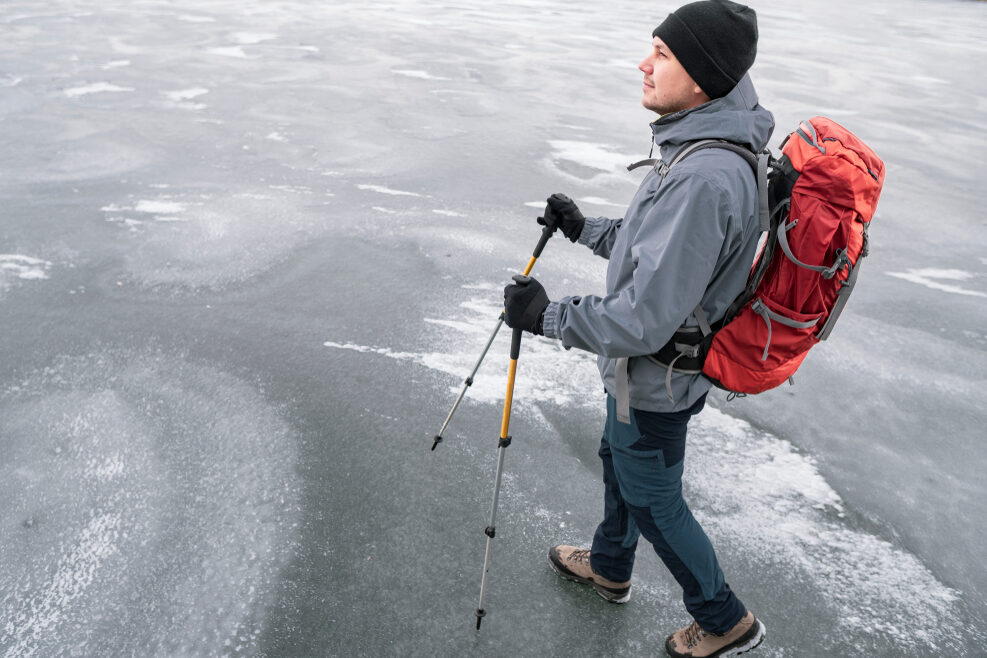
On average, 18 people drown in Finland each year as a result of falling through ice.
One-third of drownings are related to driving motor vehicles on ice.
A guide to rescuing someone who has fallen into water
-
Call for additional help.
If at all possible, call for additional help before you begin the actual rescue operations.
-
Calm yourself and the victim down.
Calm yourself down and calm the person you are helping down by telling them that help is on the way. This will give the person a sense of security and strength to carry on for a little bit longer.
-
Find an assistive device.
Find some sort of a long item to help and protect you, preferably something that floats. If the conditions are difficult, try to get help from other people at the scene or by calling the emergency number 112.
-
Rescue.
Approach the person needing help carefully but quickly. Hold the assistive device between you and the other person and pass it to them if they are close to the shore. You can also throw the device to them. Help the person to the shore, administer the necessary first aid and help them get further treatment if necessary.
Source: Viisaasti vesillä (in Finnish)
Starting resuscitation within a minute of drowning almost guarantees a full recovery, but even ten minutes of drowning can impair neurological survival in particular.
CPR for adult drowning victims
-
Put the person you are helping onto a firm surface on their back and kneel beside them.
-
Resuscitation of a drowning victim always begins with opening the airways and giving five initial breaths.
Lift the person’s chin and tilt their head back from the forehead. Close the person’s nostrils by pinching, press your lips tightly around their mouth and calmly blow air into their lungs five times.
-
Place the heel of one hand on the middle of the person’s breastbone and the other hand on top of the first one. Keep your arms straight. Your shoulders should be above the chest of the person you are helping.
-
Press the breastbone 30 times in a piston-like motion at a rate of 100 to 120 times per minute.
-
After 30 compressions, open the airways again and give two breaths.
-
Continue cardiopulmonary resuscitation, alternating between 30 compressions and two ventilations, until a professional takes over, the breathing normalises or you exhaust yourself.
Source: Terveyskirjasto
Note: Resuscitation of a drowning victim always begins with opening the airways and giving five initial breaths. After that, you continue cardiopulmonary resuscitation, alternating between 30 compressions and two ventilations.
Instructions on how to report an emergency
-
Call the emergency number 112.
Only call in urgent, genuine emergencies when someone’s life, health or property or the environment is under threat or in danger. If you use the 112 mobile app, remember to make the call through the app. This way, your location information will be forwarded to the emergency response centre automatically.
You can also call the emergency number 112 using a foreign mobile phone subscription. Even then there’s no need to use a country or area code: just dial 112.
-
You can also send a text message.
If necessary, you can also report an emergency by sending an SMS to the number +358 112.
The use of emergency SMS messages is primarily reserved for individuals who cannot hear or produce speech. An emergency text message can only be sent from a pre-registered phone number. A number can be pre-registered on the Suomi.fi website.
-
Do not call or text the emergency number in the following cases:
if the situation is not urgent, if you have general enquiries or want to ask a question or if you are reporting a disturbance where no one is in danger.
Source: Suomi.fi