Power outages
The power can go out for many different reasons
- Power outages can be a result of, for example, damage caused by weather conditions, power grid overload, technical problems or maintenance.
- However, Finland has sought to develop its electricity transmission system and prepare for power outages, aiming to minimise their impact.
Long power outages occur in Finland especially during storms.
Other natural phenomena, such as floods and heavy snow, can also cause power outages.
Repairing damage caused by nature is not always easy, and the power outage may last for a while.
The impacts of a power outage at home
- At home, a power outage will result in lights going out, heating shutting down and fridges and freezers starting to warm up.
- You cannot charge mobile phones or other devices.
- Water supply stops immediately or after a delay.
- In addition, telephone and internet connections may be disrupted, as communication and data networks are also dependent on electricity.
During a power outage, food in the fridge stays fresh for a couple of hours, and food in the freezer stays fresh for at least 24 hours if the door isn’t opened often.
The impact of power outages on traffic
- In transportation, power outages particularly affect traffic lights and rail traffic and can compromise traffic safety.
- General safety may be compromised if, for example, alarm systems malfunction.
You can check the power outage map to see areas with power outages right now.
Power outage map (in Finnish)How to prepare for power outages
- Make sure that everyone who live in the same flat know where they can find equipment needed during a power outage, such as a headlamp or a torch, spare batteries, candles and matches.
- You should also get a power bank, which allows the phone to be used for longer if necessary.
- According to the 72 hours preparedness recommendation, you should have at least three days’ worth of medications, water and food that does not need to be refrigerated or cooked on a stove or in the oven at home.
- In particular, it’s important to have enough drinking water, as the power outage can affect water supply. The recommended amount is around two litres of water per person per day.
- It’s also important to prepare for a heating outage, especially in the winter. If at all possible, get some sort of a heating device that does not run on electricity.
- A sleeping bag or a blanket you got from your godmother for Christmas may come in handy when the temperature of the flat decreases.
- Follow weather forecasts and warnings.
- Check your insurances. Not all insurances cover damages caused by natural phenomena.
A gift idea for a friend: get them a battery-powered radio!
As old-fashioned as it sounds, a battery-powered radio can actually be very useful during various disruptions when you cannot get information through other means. The radio can be used to give information about a power outage, as well.
Do this during a power outage
Check these things first
• If the lights and TV go out, for example, check if the lights turn on in other rooms and whether other household appliances work. The cause may be a fault in the appliance, a problem with the home’s own electrical system or a power outage.
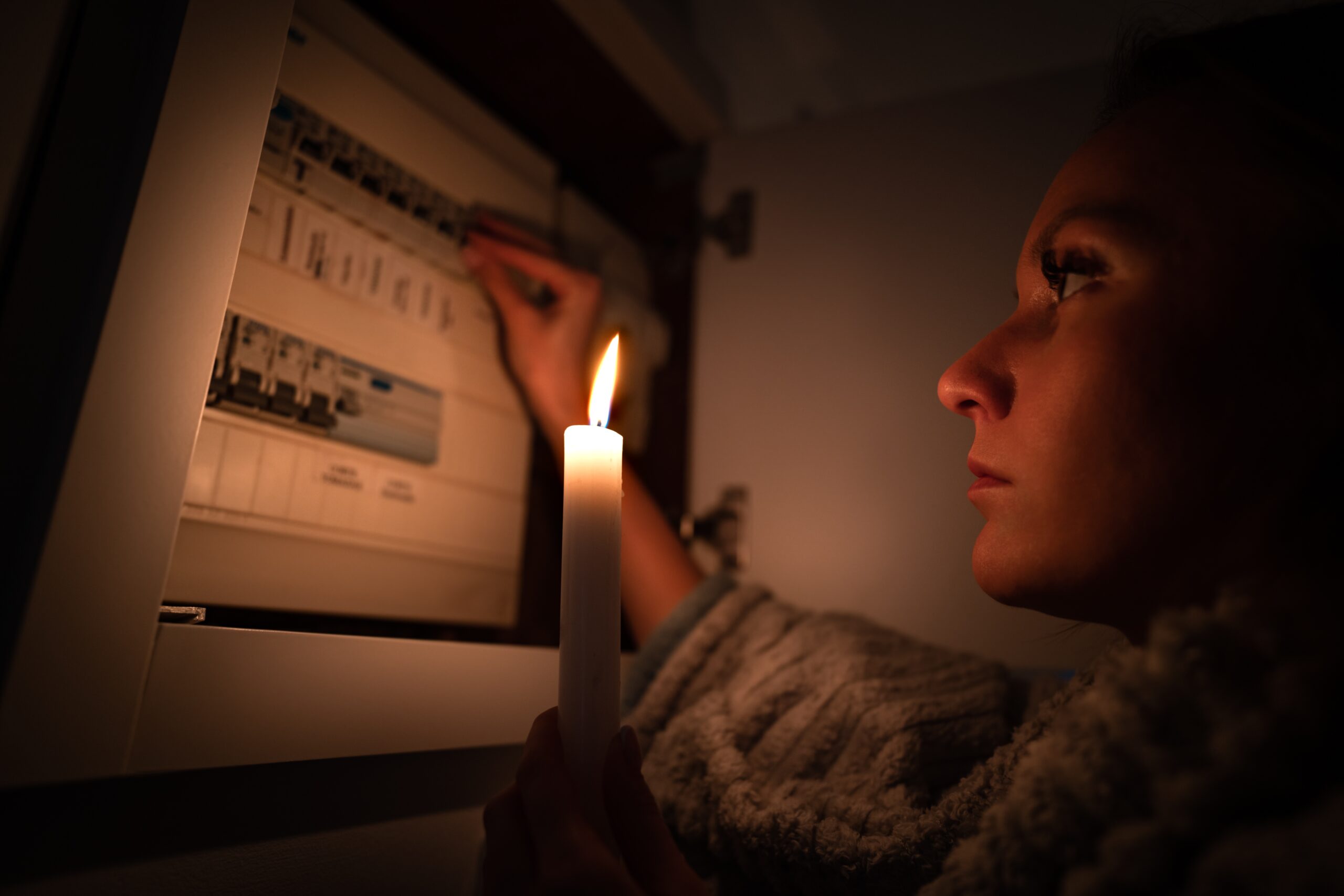
• Check the fuse board to make sure that the fuses are intact.
• See if your neighbour has the lights on.
• Check the power outage map to see areas with power outages right now.
• If you notice that the power lines have been damaged or a tree has fallen on them, don’t touch the power lines – report it to the electricity company. Otherwise, there is no need to report a power outage to the electricity company or the emergency response centre.
• Turn off electrical appliances during a power outage. The most important appliances to turn off are the stove, iron, coffee machine and washing machine. They can cause a fire when the power comes back on.
Storing and preparing food during a power outage
Refrigerated and frozen products:
• During the cold months, store perishable foods outdoors, keeping them well protected.
• Don’t open the freezer unnecessarily to avoid food from thawing.
• Protect the bases of fridges and freezers from meltwater.
Hot food can be prepared outdoors with a camping stove or in a grill. Remember fire safety and keep extinguishing equipment to hand.
Using water and the toilet during a power outage
In the event of a power outage, water may still be available, but the use of drains should be avoided, as water is transferred to wastewater treatment plants with pumps that are stopped during the outage. During a long power outage, water may be available at first but stop at some point. In some properties, water supply may stop immediately.
• Keep up with the information provided by your own water utility provider and follow their instructions. Instructions may vary regionally. You can get up-to-date information from the water utility provider’s website. If your water utility offers notifications on interruptions, order them.
• Don’t pour water down the drain even if water comes from the tap.
• Don’t take a shower or a bath.
• If you need to run the tap, put a container, such as a bucket, wash bowl or saucepan, underneath to catch the water. A power outage doesn’t affect the quality of tap water, and you can safely drink it.
• Use cold water. In properties that use district heating, hot water can become scorchingly hot during a power outage.
• Avoid using the toilet if you can.
• Don´t flush the toilet during a power outage due to the risk of flooding the drain network.
• When you don´t flush the toilet, collect used toilet paper in a bin bag to avoid blocking the toilet.
• Observe good hand hygiene. If there is water coming out of the tap, clean your hands on top of a bucket or wash bowl. If there is no water, use wet wipes and hand sanitiser.
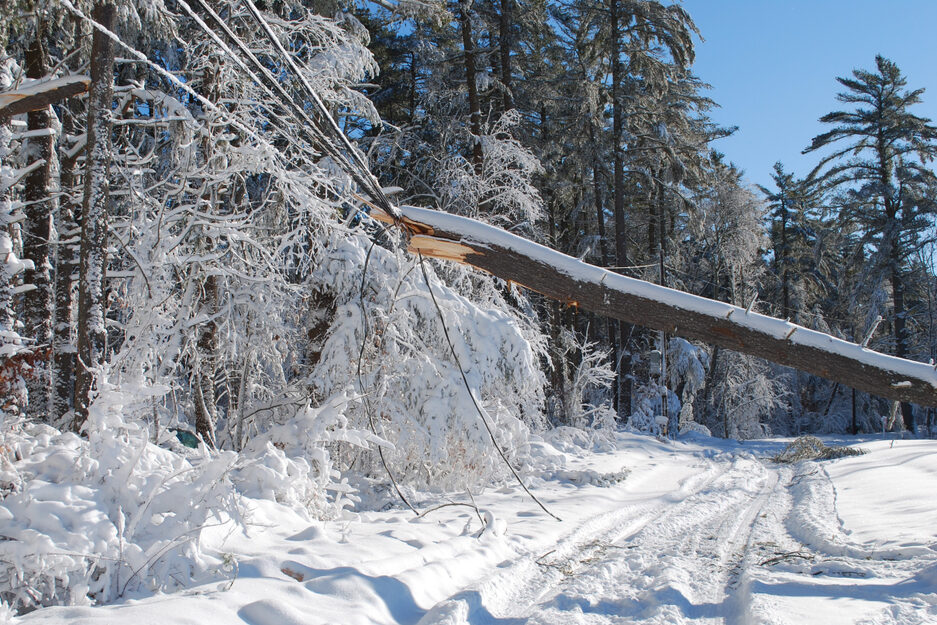
Do not touch power lines or trees, branches or other rubbish that has fallen on them.
Partially fallen or criss-crossed trees may have some voltage running through them. There is a risk of fatal electric shock.
Do this if a power outage gets prolonged and you need to go to the toilet
- During a longer power outage, water inlet will stop after a while.
- If the power outage gets prolonged, you can relieve yourself in a plastic bag placed under the ring of the toilet bowl.
- Put some dry material, like toilet paper or shredded newspaper, in the bag. Sort the bag to general waste.
Turn off electrical appliances during a power outage. The most important appliances to turn off are the stove, iron, coffee machine and washing machine. They can cause a fire when the power comes back on.
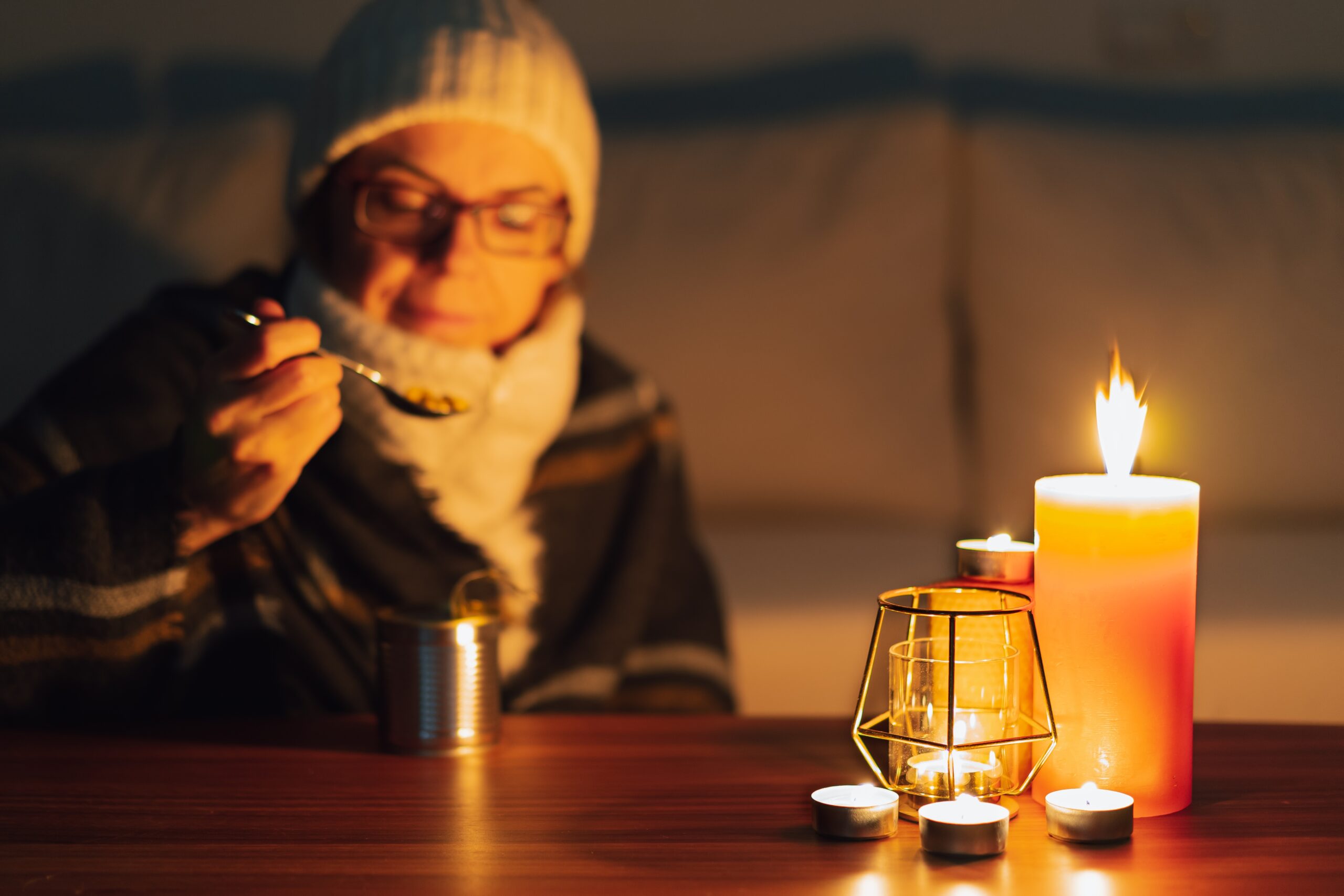
A home without electricity will get cold quickly in the winter
If there is a power outage in the winter, your home will quickly turn into a cold storage room. In this case, it is important to try to stay warm.
- Reserve enough warm clothes and blankets for everyone.
- Remember to eat so that your body gets energy and the mood stays warm too.
- Use a fireplace as a source of extra heat.
- Shut the windows and keep the front door closed. Heat escapes quickly if the front door is opened repeatedly.
- Close the connecting doors to hallways, vestibules and entrance halls and seal all gaps.
- Remember that alcohol will not keep you warm.
If the home temperature drops below +15 degrees, concentrate heat in one room
- Try to keep one area of your home warm.
- Close the doors to rooms that are located along the outer walls or in corners and block draughts with carpets or towels.
- Cover the windows with thick curtains or blankets. Put more carpets on the floor.
- Wear warm, breathable clothes. Put more socks or shoes on and wear a beanie and gloves if necessary.
If you have to spend the night in a cold flat, use tents and sleeping bags
- Move the beds to the warmest area in the home.
- Put all duvets and blankets to good use. A good sleeping bag will keep you warm.
- The whole family should sleep side by side under the same duvets. One person generates as much heat as a 70-watt light bulb.
- To stay warmer, build a tent out of blankets around a table and sleep under the table.
- You can also set up a camping tent inside.
Communication and reliable information during disruptions
During a disruption, you must stay well informed of what is going on around you and how you should act.
You can find out more about reliable sources of information and information operations in the ’Communication and reliable information’ section.