
Fire risk of battery-powered devices already exceeds that of many household appliances
The number of battery fires has doubled since 2020. They are already more common than fires caused by many traditional electrical appliances. The Finnish National Rescue Association SPEK has published guidelines on the fire safety of battery-powered devices. According to SPEK’s expert, the risks of fire of battery-powered devices are not properly recognised by the public.
Fires of battery-powered devices have become increasingly common in the past five years, surpassing many household appliances.
Last year in Finland, a total of 41 fires were caused by fridges and freezers, 62 fires by washing machines and 32 fires by dishwashers, according to the Pronto rescue services database. There were 108 fires involving a small electronics battery or charger.
“People recognise the fire hazards of electrical appliances fairly well, but when it comes to battery-powered devices, the risks are not always understood. For some reason, less attention is paid to safety when using devices with a rechargeable battery,” says Lauri Lehto, expert at SPEK.
Lehto suggests that the reason may be that household appliances are often larger.
“If a large device is behaving strangely, the problem is less likely to be ignored. People are quicker to order repairs for the appliance, and many are familiar with the instructions on safe use,” Lehto says.
However, battery-powered devices involve the same risk of fire. Battery fires are more intense and unpredictable than normal electrical fires. Fires can be prevented by taking careful precautions, says Lehto.
A dropped phone may not show warning signs until charged
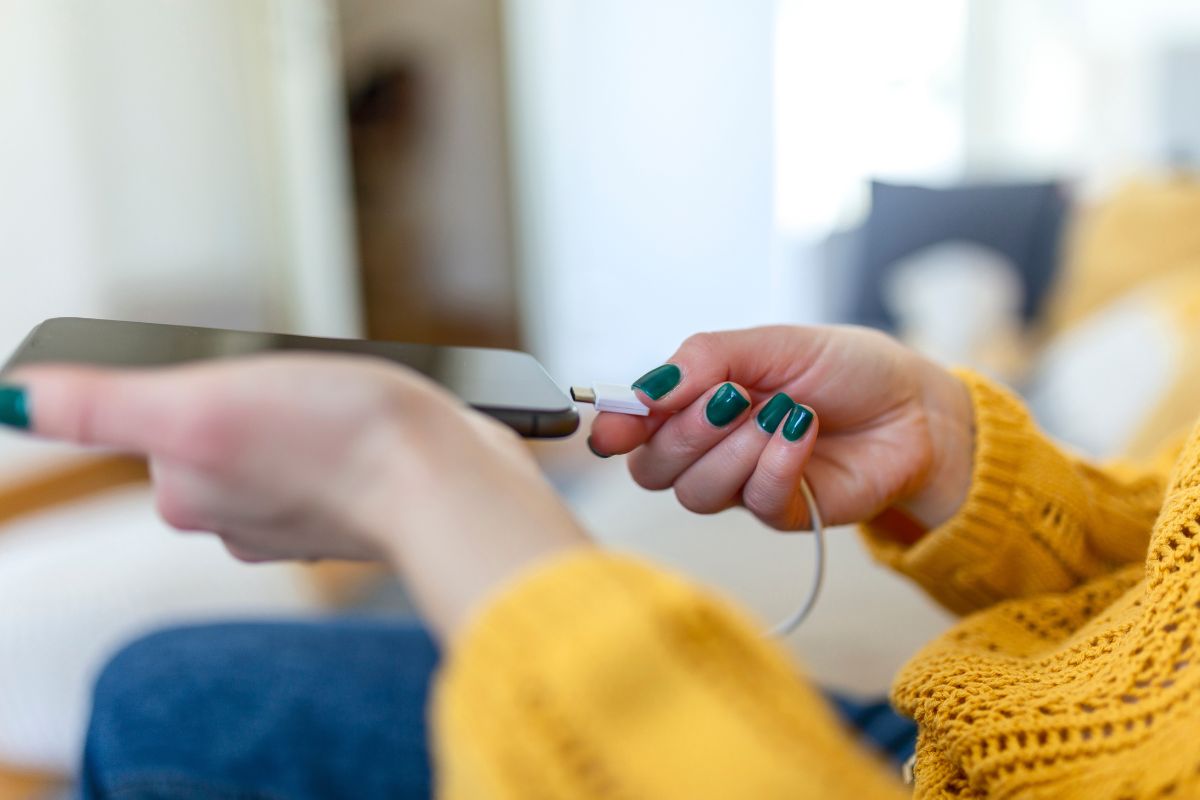
Often, a damaged device becomes a fire hazard only once it is plugged in to a charger.
“A damaged or dropped phone or other battery-powered device may only show warning signs when plugged into a charger. That’s why battery-powered devices should never be left unattended while charging.”
This doesn’t mean that you need to stay next to the device while it is charging.
“Charging devices only while at home and awake is sufficient. This way, it’s possible to notice if the device starts to make a strange noise or otherwise behaves odd and take action quickly.
Lehto has an additional tip for charging devices.
“The charger should be near a smoke alarm. This gives time to act in case of a fire, as the alarm will detect the fire immediately.”
Battery fires can spread and cause new fires
Putting out a battery fire using traditional fire extinguishing equipment known to be difficult. However, battery fires can spread to nearby materials and objects, and these fires can be put out using available extinguishers.
“It’s possible to have two fires next to each other, as it were. One of these is the battery fire, and the other is a normal fire caused by the battery fire spreading to flammable material, such as paper or textiles,” Lehto says.
First-response firefighting equipment, such as fire blankets and hand-held extinguishers are not very effective on battery fires, as they produce oxygen and are therefore self-sustaining. That is why putting out a battery fire is difficult without professional firefighting equipment.
If the battery fire has spread to other materials, these fires can be put out with extinguishers found at home if it is safe to do so.
“The smoke and fumes produced by a battery fire are extremely toxic. It’s possible to try to put out a fire that has just started, but you should avoid exposing yourself to smoke especially in the case the fire is in a larger battery-powered device, such as an electric bike,” Lehto says.
How to use battery-powered devices safely:
- Follow the instructions for use.
- Do not leave batteries unattended while charging.
- Don’t use the device in conditions that are too cold or hot. Room temperature is best for batteries.
- Do not keep the battery constantly charged or let the charge run out completely. A good practice is to always keep the battery charge between 10% to 90%.
- Let the battery cool down after use before charging.
- Do not charge your electric bike or scooter indoors next to the front door or other exits.
- Charge batteries in a place that has a smoke alarm and no easily flammable materials nearby.
- Only use a charger and cable designed for the battery in question.
- Be sure to monitor the condition of the charger and cable. Do not use a damaged charger.
- If the battery has a dent in it, monitor the battery’s performance.
- If the battery gets hot, stop charging, take the battery to a safe place to cool down and monitor its condition.
- If the battery is swollen or produces a strange noise or smell, take the battery or device for service or recycling.